
De la Rosa
Mazapán de la Rosa is one of the most iconic Mexican confectionery products, originally created in 1942 by the Michel González family in Guadalajara and now part of Dulces de la Rosa. The brand has become a cultural symbol shared across generations, recognized for its peanut-based flavor, fragile texture, and unmistakable yellow-and-red visual identity. Over time, the product has expanded into multiple variations and formats, strengthening strong consumer loyalty and positioning itself as one of the most emotionally recognizable sweets in Mexico. The analysis also highlights how the sensory experience of the mazapán is deeply connected not only to taste, but also to touch, sight, smell, and the ritual of carefully opening the delicate candy without breaking it.

Antes / Before
-
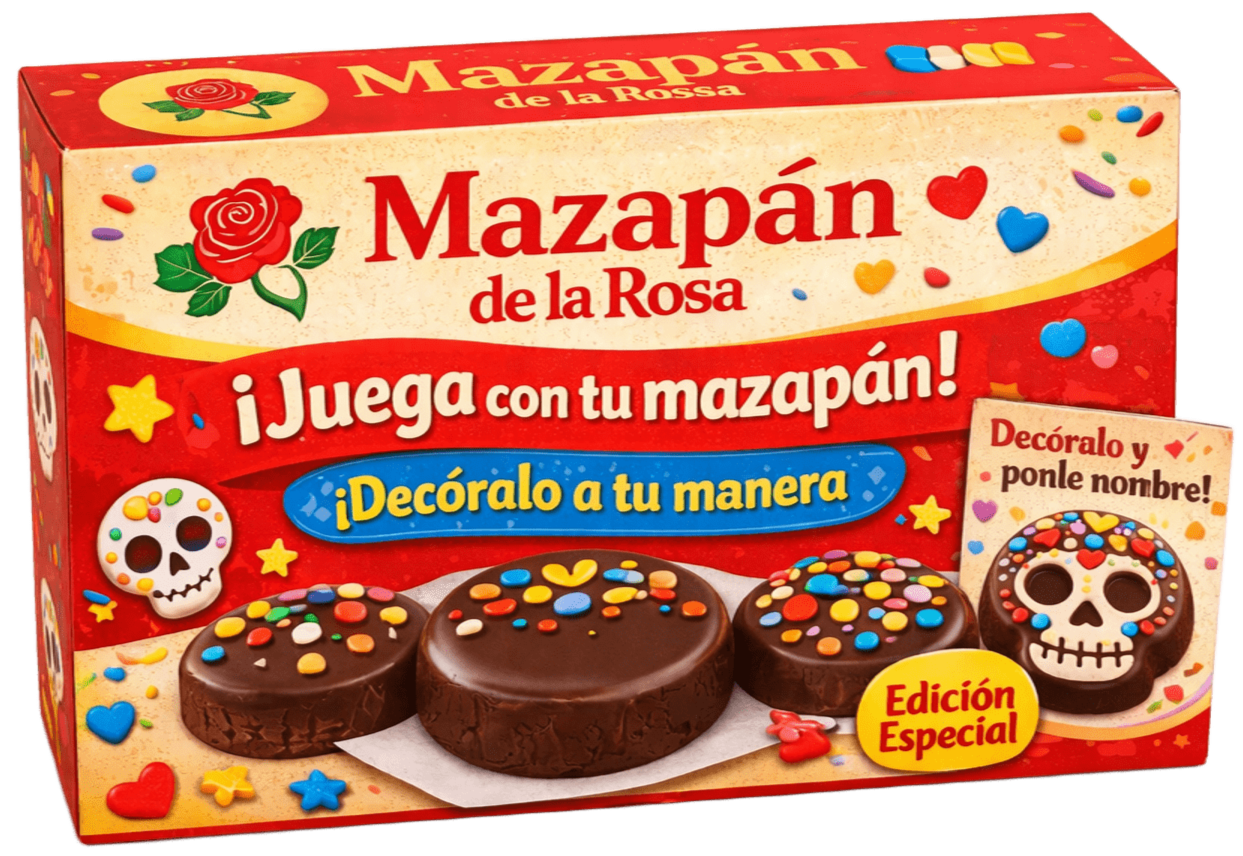
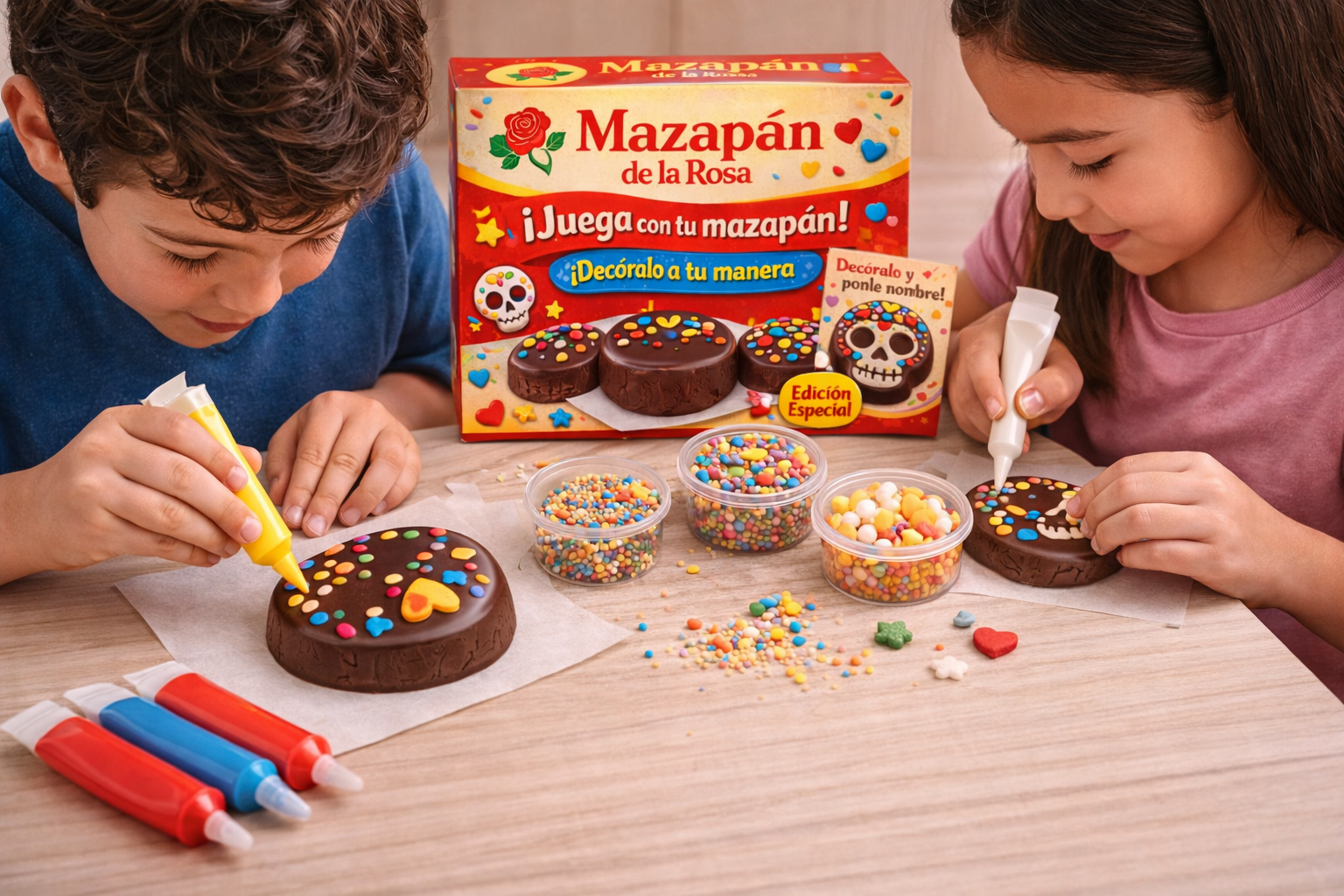
The redesign proposal focuses on strengthening the brand as a cohesive visual and sensory system while preserving its nostalgic and popular essence. The project identifies inconsistencies between product variants and proposes a more unified packaging language through refined materials, tactile interactions, and more structured branding. Special attention is given to the act of opening and handling the mazapán, introducing glassine paper and more intentional packaging solutions that protect the product while elevating the emotional experience. Additionally, the proposal expands the brand into more playful and interactive experiences — such as customizable and decorative editions inspired by celebration culture — transforming the mazapán from a traditional candy into a more expressive, collectible, and participatory ritual connected to contemporary Mexican identity.

Mazapán de la Rosa es uno de los productos de confitería más icónicos de México, creado originalmente en 1942 por la familia Michel González en Guadalajara y actualmente parte de Dulces de la Rosa. La marca se ha convertido en un símbolo cultural compartido entre generaciones, reconocido por su sabor a cacahuate, su textura frágil y su inconfundible identidad visual amarilla y roja. Con el tiempo, el producto se ha expandido a distintas variantes y formatos, fortaleciendo una gran lealtad por parte de los consumidores y posicionándose como uno de los dulces más emocionalmente reconocibles en México. El análisis también destaca cómo la experiencia sensorial del mazapán está profundamente conectada no solo con el gusto, sino también con el tacto, la vista, el olfato y el ritual de abrir cuidadosamente el dulce sin romperlo.

-
The redesign proposal focuses on strengthening the brand as a cohesive visual and sensory system while preserving its nostalgic and popular essence. The project identifies inconsistencies between product variants and proposes a more unified packaging language through refined materials, tactile interactions, and more structured branding. Special attention is given to the act of opening and handling the mazapán, introducing glassine paper and more intentional packaging solutions that protect the product while elevating the emotional experience. Additionally, the proposal expands the brand into more playful and interactive experiences — such as customizable and decorative editions inspired by celebration culture — transforming the mazapán from a traditional candy into a more expressive, collectible, and participatory ritual connected to contemporary Mexican identity.

Isabela Quiroz
-
El presente trabajo constituye un ejercicio académico especulativo desarrollado exclusivamente con fines educativos, de investigación y pedagógicos, dentro de un marco estrictamente no comercial. Se presenta como una exploración hipotética de diseño y no constituye, ni pretende constituir, una propuesta comercial, oferta de servicios profesionales, producto listo para mercado ni trabajo realizado por encargo.
Todas las marcas registradas, marcas de servicio, nombres comerciales, imagen comercial (trade dress), logotipos, identificadores de marca, denominaciones sociales, nombres de producto, eslóganes y cualquier otra propiedad intelectual referida o representada en este documento son propiedad exclusiva de sus respectivos titulares y se encuentran protegidos por la legislación nacional e internacional aplicable en materia de propiedad intelectual, incluyendo de manera enunciativa mas no limitativa la Ley Federal de Protección a la Propiedad Industrial, la Ley Federal del Derecho de Autor, el Convenio de París para la Protección de la Propiedad Industrial, el Convenio de Berna para la Protección de las Obras Literarias y Artísticas, el Acuerdo sobre los Aspectos de los Derechos de Propiedad Intelectual relacionados con el Comercio (ADPIC), y la Lanham Act (15 U.S.C. §1051 et seq.) en su carácter de referencia comparada.
Cualquier referencia a dichas marcas u obras protegidas se realiza exclusivamente con fines de comentario académico, crítica, análisis, educación e identificación nominativa, en apego de buena fe a las doctrinas de uso legítimo (fair use), uso nominativo legítimo (nominative fair use) y demás limitaciones y excepciones análogas reconocidas por la legislación aplicable en materia de derechos de autor y propiedad industrial. No se reclama titularidad, autoría, patrocinio ni interés propietario alguno sobre la propiedad intelectual de terceros aquí referida.
La presentación de este trabajo no implica, sugiere ni establece relación oficial, patrocinio, aval, certificación, afiliación, alianza, asociación, coinversión, acuerdo de licenciamiento ni relación comercial alguna con las marcas, empresas, instituciones o personas mencionadas. Cualquier semejanza con proyectos comerciales existentes, briefs de cliente o encargos profesionales es coincidente o se utiliza únicamente como referencia contextual para fines de discusión y análisis académico.
El autor manifiesta expresamente que no existe intención de generar confusión en el consumidor, diluir la distintividad de signos protegidos, deteriorar la reputación de marca alguna, infringir imagen comercial protegida, ni obtener beneficio comercial derivado del prestigio o goodwill asociado a la propiedad intelectual de terceros. Este trabajo no podrá ser reproducido, distribuido, exhibido ni reutilizado con fines comerciales sin la autorización previa y por escrito de los respectivos titulares de derechos.
Todo contenido conceptual original, decisiones de diseño, metodologías, marcos de trabajo y expresiones creativas desarrolladas en este documento son propiedad intelectual del autor, sin perjuicio de los derechos de terceros aquí señalados. En caso de que algún titular de derechos identifique contenido que considere excede el alcance del uso legítimo académico, el autor se compromete a atender dichas observaciones de buena fe y, cuando proceda, modificar o retirar el material correspondiente.
-
This work constitutes a speculative academic exercise produced exclusively for educational, research, and pedagogical purposes within a non-commercial academic framework. It is presented as a hypothetical design exploration and does not constitute, nor is it intended to constitute, a commercial offering, professional service, market-ready product, or commissioned work.
All trademarks, service marks, trade names, trade dress, logos, brand identifiers, corporate names, product names, slogans, and any other intellectual property referenced or depicted herein are the exclusive property of their respective owners and are protected under applicable national and international intellectual property laws, including but not limited to the Lanham Act (15 U.S.C. §1051 et seq.), the United States Copyright Act (17 U.S.C. §101 et seq.), the Ley Federal de Protección a la Propiedad Industrial, the Ley Federal del Derecho de Autor, the Paris Convention for the Protection of Industrial Property, the Berne Convention for the Protection of Literary and Artistic Works, and the Agreement on Trade-Related Aspects of Intellectual Property Rights (TRIPS).
Any reference to such marks or protected works is made solely for purposes of academic commentary, criticism, analysis, education, and nominative identification, in good-faith reliance on the doctrines of fair use, nominative fair use, and analogous limitations and exceptions recognized under applicable copyright and trademark law. No claim of ownership, authorship, sponsorship, or proprietary interest is made over any third-party intellectual property referenced herein.
The presentation of this work does not imply, suggest, or establish any official relationship, endorsement, sponsorship, certification, affiliation, partnership, joint venture, licensing arrangement, or commercial relationship with any of the brands, companies, institutions, or individuals referenced. Any resemblance to existing commercial projects, client briefs, or professional engagements is either coincidental or used solely as a contextual reference for academic discussion and analysis.
The author expressly disclaims any intent to cause consumer confusion, dilute distinctive marks, tarnish brand reputation, infringe upon protected trade dress, or derive commercial benefit from the goodwill associated with any third-party intellectual property. This work shall not be reproduced, distributed, exhibited, or repurposed for commercial use without the prior written authorization of the respective rights holders.
All original conceptual content, design decisions, methodologies, frameworks, and creative expressions developed herein remain the intellectual property of the author, subject to the rights of third parties identified above. Should any rights holder identify content they believe exceeds the scope of academic fair use, the author commits to addressing such concerns in good faith and, where appropriate, modifying or removing the relevant material.